Health
Health is one of the most valuable assets in human life. It plays a vital role in shaping an individual’s personality, productivity, and overall quality of life. A healthy person can perform daily activities efficiently, face challenges confidently, and enjoy life to the fullest. Health is not limited to the absence of disease; rather, it is a state of complete physical, mental, and emotional well-being. Without good health, even wealth, education, and success lose their true meaning.
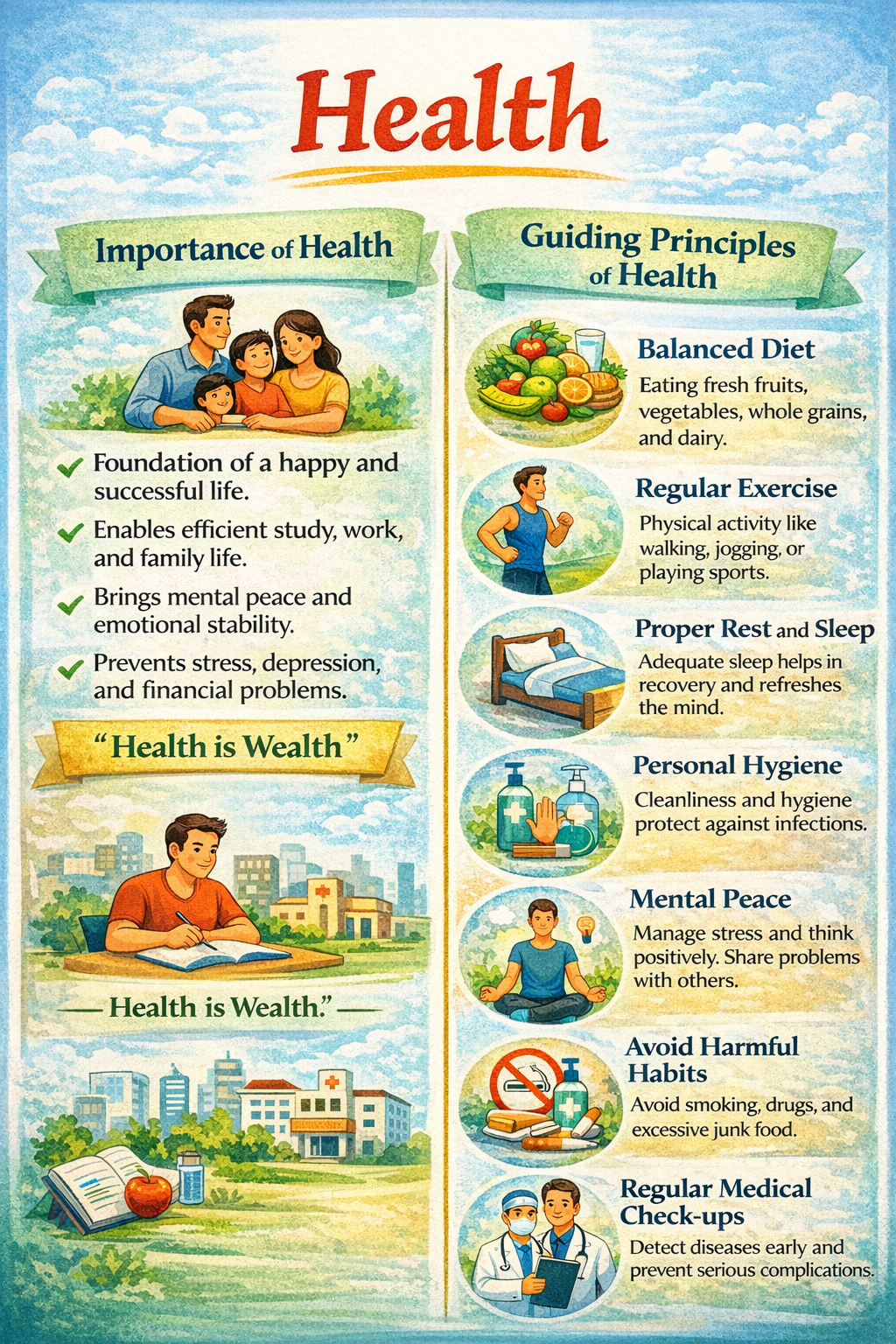
Physical health is the foundation of a healthy life. It refers to the proper functioning of the human body and its systems. Maintaining physical health requires a balanced diet, regular exercise, adequate sleep, and personal hygiene. A balanced diet includes fruits, vegetables, whole grains, proteins, and dairy products that provide essential nutrients to the body. Proper nutrition strengthens the immune system and helps prevent various diseases such as obesity, diabetes, and heart problems. Regular physical activity, such as walking, jogging, cycling, or playing sports, keeps the body active, improves blood circulation, and maintains a healthy weight. Adequate rest and sleep allow the body to recover and function properly, while cleanliness and hygiene protect against infections and illnesses.
Mental health is another important aspect of overall health. It refers to a person’s emotional and psychological well-being. A mentally healthy person can think clearly, make good decisions, manage stress, and cope with the challenges of life. In today’s fast-paced world, stress, anxiety, and depression have become common problems due to academic pressure, work stress, financial difficulties, and social issues. Poor mental health can affect concentration, relationships, and physical health. To maintain mental well-being, it is important to develop positive thinking, manage time effectively, and take breaks from routine stress. Activities such as reading, meditation, exercise, and spending time with loved ones help relax the mind. Sharing problems with friends, family, or professionals also reduces emotional burden and promotes mental peace.
Emotional health is closely connected with mental health and plays a significant role in a person’s behavior and relationships. Emotional health means understanding, expressing, and controlling one’s emotions in a healthy way. Emotions such as happiness, anger, fear, sadness, and excitement are natural, but extreme or uncontrolled emotions can lead to problems. Emotional stability helps individuals handle difficult situations calmly and build strong social relationships. A person with good emotional health can communicate effectively, show empathy, and maintain self-confidence. Developing emotional intelligence, practicing patience, and maintaining a positive attitude are essential for emotional well-being.
A healthy lifestyle is the key to achieving and maintaining good health. Healthy habits formed at an early age often continue throughout life. Avoiding harmful substances such as smoking, alcohol, and drugs is crucial, as they damage vital organs and lead to serious diseases. Excessive consumption of junk food and sugary drinks also negatively affects health. Instead, people should adopt healthy eating habits and drink plenty of water. Regular health check-ups help detect diseases at an early stage and prevent complications. Maintaining cleanliness at home and in the surrounding environment reduces the spread of infectious diseases and promotes community health.
Health is closely linked to productivity and success. A healthy individual can study effectively, work efficiently, and contribute positively to society. On the other hand, poor health limits physical and mental abilities, causing stress and financial burden. Medical expenses, loss of working days, and reduced efficiency affect not only individuals but also families and the economy. Therefore, governments and societies must prioritize healthcare services, promote health awareness, and provide access to clean water, proper sanitation, and medical facilities.
In modern times, technological advancement has made life easier, but it has also created health challenges. Lack of physical activity, long screen time, and unhealthy eating habits have increased lifestyle-related diseases. People spend more time on mobile phones and computers, which affects posture, eyesight, and mental health. To counter these effects, individuals must balance technology use with physical activity and social interaction. Encouraging outdoor activities and healthy routines is essential for overall well-being.
In conclusion, health is the true wealth of life. Without good health, happiness and success remain incomplete. Physical, mental, and emotional health together form a balanced and fulfilling life. Every individual has a responsibility to take care of their health by adopting a healthy lifestyle, avoiding harmful habits, and maintaining a positive outlook. Societies and governments must also work together to promote health awareness and provide quality healthcare facilities. By valuing health and making it a priority, people can lead a longer, happier, and more productive life. Dr,Amanullah
Leave a Reply