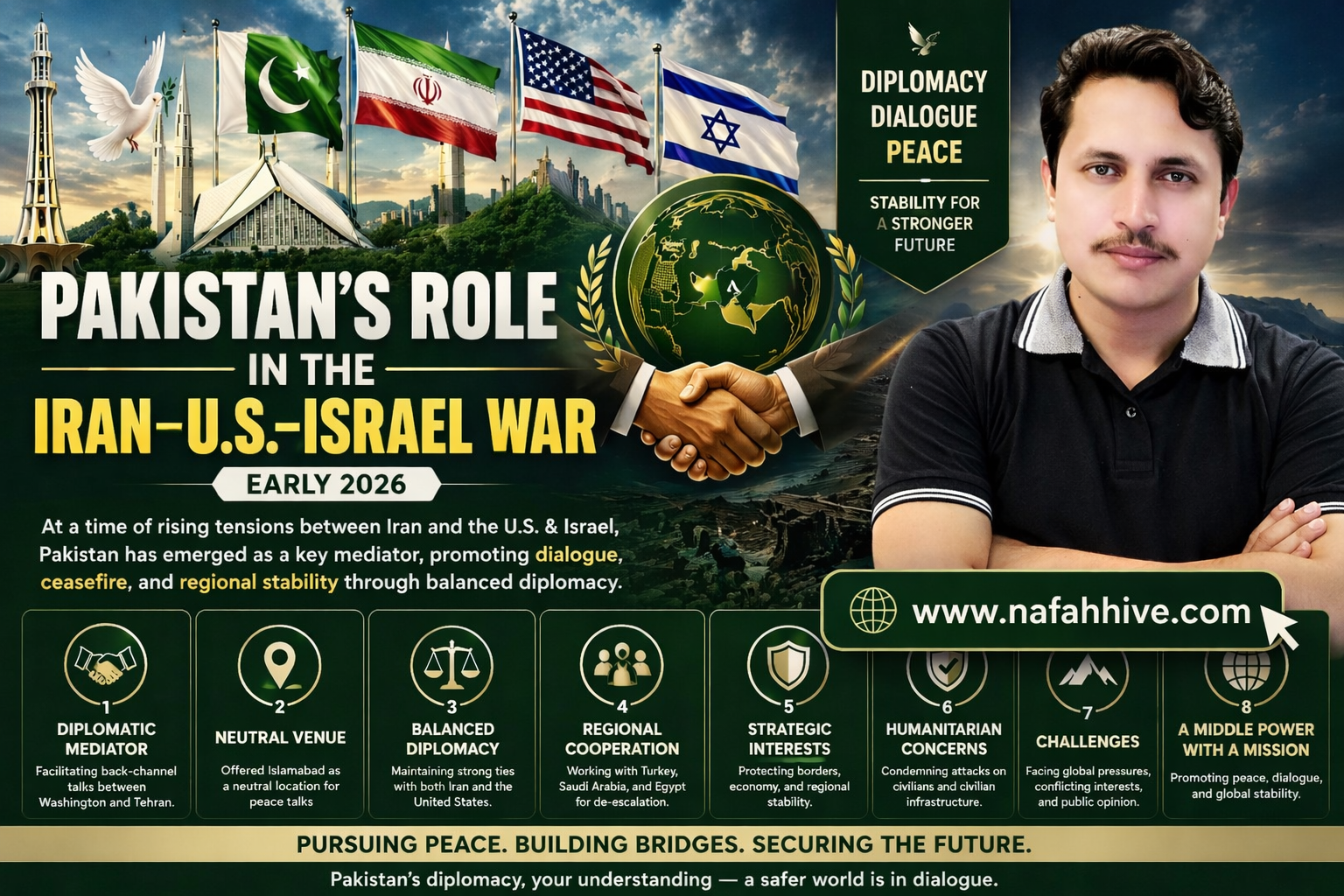
Pakistan’s Role in the Iran–U.S.–Israel War (Early 2026)
The military tensions between Iran and the alliance of United States and Israel in early 2026 created a dangerous situation in the Middle East. The conflict involved airstrikes, military deployments in the Gulf region, and strong diplomatic reactions from many countries. In this tense environment, Pakistan emerged as an important diplomatic actor attempting to reduce tensions and prevent the conflict from expanding into a wider regional war. Pakistan’s role has mainly focused on mediation, diplomatic balancing, regional cooperation, and protecting its own strategic interests.
- Pakistan as a Diplomatic Mediator
One of Pakistan’s most significant roles in the conflict has been mediation. Pakistan has tried to act as a bridge between the opposing sides by encouraging dialogue and communication. The government led by Shehbaz Sharif has actively called for calm and negotiations rather than further military escalation.
Reports indicate that Pakistan helped facilitate back-channel communications between leaders in Washington, D.C. and Tehran. These unofficial diplomatic channels are important because they allow countries to exchange proposals without public pressure. By helping to keep communication open, Pakistan attempted to reduce misunderstandings and encourage a peaceful solution.
Pakistan also proposed the idea of a temporary ceasefire to give diplomacy a chance. A two-week ceasefire proposal was suggested to both sides so that negotiations could begin and the immediate violence could be paused. This initiative highlighted Pakistan’s desire to prevent further destruction and instability in the region. - Offering Islamabad as a Neutral Venue
Another major diplomatic step taken by Pakistan was offering its capital, Islamabad, as a neutral location for peace talks. Neutral venues are often used in international diplomacy because they provide a safe and politically balanced environment where opposing parties can negotiate.
By offering Islamabad as a host for negotiations, Pakistan signaled that it was willing to play a constructive role in resolving the crisis. Hosting such talks would not only help the peace process but would also enhance Pakistan’s global diplomatic standing as a responsible middle power capable of facilitating dialogue during major international conflicts. - Maintaining a Careful Diplomatic Balance
Pakistan’s approach to the conflict reflects a careful balancing act. On one hand, Pakistan maintains historical and cultural ties with Iran due to geographic proximity and regional cooperation. On the other hand, Pakistan also has long-standing strategic and economic relations with the United States.
Because of these relationships, Pakistan has tried to remain relatively neutral while advocating for peace. Instead of supporting military actions by either side, Pakistan has consistently emphasized diplomacy and de-escalation. This balanced approach allows Pakistan to maintain relations with both sides while still promoting stability.
Pakistan’s neutral stance is also supported by the fact that it does not host permanent American military bases on its territory. This helps Islamabad maintain credibility as a mediator rather than appearing aligned with one side of the conflict. - Cooperation with Regional Powers
Pakistan has not acted alone in its diplomatic efforts. It has coordinated with several other influential Muslim-majority and regional states to reduce tensions. Countries such as Turkey, Saudi Arabia, and Egypt have also called for restraint and dialogue.
Through diplomatic meetings and joint statements, these countries have encouraged negotiations and warned against further escalation. Such regional cooperation is important because Middle Eastern conflicts often have widespread political, economic, and security consequences for neighboring countries.
Pakistan’s collaboration with these states reflects its broader foreign policy goal of strengthening cooperation within the Muslim world and promoting collective diplomatic efforts during crises. - Strategic Interests and Security Concerns
Pakistan’s involvement in the conflict is not only motivated by diplomacy but also by its own national interests. Pakistan shares a long border with Iran, which means instability in Iran could directly affect Pakistan’s security.
A prolonged war could lead to several challenges for Pakistan, including refugee flows, border security problems, and economic disruptions. Additionally, conflict in the Persian Gulf could affect global oil supplies and trade routes, which would have serious economic consequences for Pakistan and other countries.
Pakistan is therefore strongly interested in preventing the conflict from expanding. Maintaining regional stability helps protect Pakistan’s economy, security, and domestic political environment. - Official Condemnation of Military Attacks
While maintaining diplomatic neutrality, Pakistan has also expressed clear concerns about the humanitarian impact of the conflict. Pakistani officials have condemned attacks on civilian infrastructure and emphasized the need to protect innocent lives.
Pakistan has particularly criticized military actions that target civilian areas, including hospitals, schools, and energy facilities. According to Pakistani diplomats at international forums, such attacks violate international law and threaten regional peace.
By raising these concerns in diplomatic forums such as the United Nations, Pakistan has tried to highlight the importance of international law and humanitarian principles. - The Challenges Facing Pakistan’s Diplomacy
Despite its efforts, Pakistan’s diplomatic mission faces many challenges. The military confrontation between Iran and the U.S.–Israel alliance involves complex strategic interests, and tensions have continued to rise due to ongoing airstrikes and military deployments.
Another challenge is that global powers and regional actors often have conflicting objectives. While some countries seek immediate ceasefires, others may prioritize strategic military goals. These differences make mediation extremely difficult.
Furthermore, public opinion in many Muslim-majority countries strongly supports Iran against Israeli attacks, which adds political pressure on governments trying to remain neutral and diplomatic. - Pakistan as a Middle Power in Global Diplomacy
Pakistan’s role in this crisis reflects a broader trend in international politics where middle powers play an increasing role in conflict mediation. Instead of major powers dominating diplomacy, countries like Pakistan can act as bridges between rival states.
Pakistan’s diplomatic engagement in the Iran-U.S.–Israel conflict demonstrates its attempt to position itself as a responsible global actor. By encouraging dialogue, promoting ceasefires, and cooperating with regional partners, Pakistan seeks to contribute to global peace and stability.
Conclusion
In conclusion, Pakistan’s role in the Iran–U.S.–Israel conflict in early 2026 has primarily focused on diplomacy and mediation. By encouraging dialogue, proposing ceasefires, offering to host peace talks in Islamabad, and working with regional partners, Pakistan has attempted to reduce tensions and prevent a wider war.
Pakistan’s actions highlight the importance of diplomacy during times of international crisis. Although challenges remain and the conflict continues to evolve, Pakistan’s efforts show how constructive engagement and balanced diplomacy can contribute to the search for peace in a highly volatile region.
Dr,Amanullah
Leave a Reply